

Best Quality ECCouncil 312-50v13 Exam Questions ITexamReview Realistic Practice Exams [2025]
Critical Information To Certified Ethical Hacker Exam (CEHv13) Pass the First Time
NEW QUESTION # 103
You have successfully comprised a server having an IP address of 10.10.0.5. You would like to enumerate all machines in the same network quickly.
What is the best Nmap command you will use?
- A. nmap -T4 -F 10.10.0.0/24
- B. nmap -T4 -r 10.10.1.0/24
- C. nmap -T4 -O 10.10.0.0/24
- D. nmap -T4 -q 10.10.0.0/24
Answer: A
Explanation:
https://nmap.org/book/man-port-specification.html
NOTE: In my opinion, this is an absolutely wrong statement of the question. But you may come across a question with a similar wording on the exam. What does "fast" mean? If we want to increase the speed and intensity of the scan we can select the mode using the -T flag (0/1/2/3/4/5). At high -T values, we will sacrifice stealth and gain speed, but we will not limit functionality.
nmap -T4 -F 10.10.0.0/24: This option is "correct" because of the -F flag.
-F (Fast (limited port) scan)
Specifies that you wish to scan fewer ports than the default. Normally Nmap scans the most common 1,000 ports for each scanned protocol. With -F, this is reduced to 100.
Technically, scanning will be faster, but just because we have reduced the number of ports by 10 times, we are just doing 10 times less work, not faster.
NEW QUESTION # 104
Which of the following types of SQL injection attacks extends the results returned by the original query, enabling attackers to run two or more statements if they have the same structure as the original one?
- A. Boolean-based blind SQL injection
- B. Union SQL injection
- C. Blind SQL injection
- D. Error-based injection
Answer: B
Explanation:
Union-based SQL injection is a technique that uses the UNION SQL operator to combine the results of the original query with the results of one or more additional queries. This allows attackers to:
Retrieve data from different database tables
Extend the result set returned to the web application
Exploit the application if both queries return the same number and type of columns According to CEH v13:
UNION SELECT can be used to enumerate tables, extract user credentials, or display sensitive data.
It requires knowledge of the structure of the original query.
Incorrect Options:
A: Error-based injection extracts data from database error messages.
B: Boolean-based blind SQLi returns true/false results to infer data.
C: Blind SQLi (generic) relies on no visible output and uses inference techniques.
Reference - CEH v13 Official Courseware:
Module 14: Hacking Web Applications
Section: "Types of SQL Injection Attacks"
Subsection: "Union-Based SQL Injection"
NEW QUESTION # 105
James is working as an ethical hacker at Technix Solutions. The management ordered James to discover how vulnerable its network is towards footprinting attacks. James took the help of an open-source framework for performing automated reconnaissance activities. This framework helped James in gathering information using free tools and resources.
What is the framework used by James to conduct footprinting and reconnaissance activities?
- A. Browser Exploitation Framework
- B. WebSploit Framework
- C. SpeedPhish Framework
- D. OSINT framework
Answer: D
Explanation:
In CEH v13 Module 02: Footprinting and Reconnaissance, the OSINT Framework is introduced as a collection of free, open-source tools and resources to aid ethical hackers in passive reconnaissance.
Key Features of OSINT Framework:
Web-based visual tool that maps out links to open-source intelligence tools.
Allows collection of emails, domains, usernames, IPs, social media data, and more.
Focuses on passive footprinting to avoid detection.
Option Clarification:
A: WebSploit Framework: Used for man-in-the-middle attacks and web vulnerabilities.
B: Browser Exploitation Framework (BeEF): Browser-focused attack tool.
C: OSINT Framework: Correct - open-source intelligence and reconnaissance.
D: SpeedPhish Framework: Phishing simulation tool, not used for passive information gathering.
Reference:
Module 02 - Tools for Footprinting and Reconnaissance
CEH iLabs: Using OSINT Framework for Target Profiling
NEW QUESTION # 106
James is working as an ethical hacker at Technix Solutions. The management ordered James to discover how vulnerable its network is towards footprinting attacks. James took the help of an open-source framework for performing automated reconnaissance activities. This framework helped James in gathering information using free tools and resources. What is the framework used by James to conduct footprinting and reconnaissance activities?
- A. Browser Exploitation Framework
- B. WebSploit Framework
- C. SpeedPhish Framework
- D. OSINT framework
Answer: D
NEW QUESTION # 107
A malicious user has acquired a Ticket Granting Service from the domain controller using a valid user's Ticket Granting Ticket in a Kerberoasting attack. He exhorted the TGS tickets from memory for offline cracking. But the attacker was stopped before he could complete his attack. The system administrator needs to investigate and remediate the potential breach. What should be the immediate step the system administrator takes?
- A. Delete the compromised user's account
- B. Change the NTLM password hash used to encrypt the ST
- C. invalidate the TGS the attacker acquired
- D. Perform a system reboot to clear the memory
Answer: C
Explanation:
A Kerberoasting attack is a technique that exploits the Kerberos authentication protocol to obtain the password hash of a service account that has a Service Principal Name (SPN). An attacker can request a service ticket (TGS) for the SPN using a valid user's ticket (TGT) and then attempt to crack the password hash offline. To prevent the attacker from using the TGS to access the service, the system administrator should invalidate the TGS as soon as possible. This can be done by changing the password of the service account, which will generate a new password hash and render the old TGS useless. Alternatively, the system administrator can use tools like Mimikatz to purge the TGS from the memory of the domain controller or the client system. Performing a system reboot, deleting the compromised user's account, or changing the NTLM password hash used to encrypt the ST are not effective ways to invalidate the TGS, as they do not affect the encryption of the TGS or the validity of the TGT. References:
* EC-Council CEHv12 Courseware Module 11: Hacking Webservers, page 11-24
* What is a Kerberoasting Attack? - CrowdStrike
* How to Perform Kerberoasting Attacks: The Ultimate Guide - StationX
NEW QUESTION # 108
A penetration tester is conducting an assessment of a web application for a financial institution. The application uses form-based authentication and does not implement account lockout policies after multiple failed login attempts. Interestingly, the application displays detailed error messages that disclose whether the username or password entered is incorrect. The tester also notices that the application uses HTTP headers to prevent clickjacking attacks but does not implement Content Security Policy (CSP). With these observations, which of the following attack methods would likely be the most effective for the penetration tester to exploit these vulnerabilities and attempt unauthorized access?
- A. The tester could execute a Man-in-the-Middle (MitM) attack to intercept and modify the HTTP headers for a Clickjacking attack
- B. The tester could execute a Brute Force attack, leveraging the lack of account lockout policy and the verbose error messages to guess the correct credentials
- C. The tester could launch a Cross-Site Scripting (XSS) attack to steal authenticated session cookies, potentially bypassing the clickjacking protection
- D. The tester could exploit a potential SQL Injection vulnerability to manipulate the application's database
Answer: B
Explanation:
The most effective attack method for the penetration tester to exploit these vulnerabilities and attempt unauthorized access would be to execute a Brute Force attack, leveraging the lack of account lockout policy and the verbose error messages to guess the correct credentials. A Brute Force attack is a hacking method that uses trial and error to crack passwords, login credentials, or encryption keys. It is a simple yet reliable tactic for gaining unauthorized access to individual accounts and organizations' systems and networks1. In this scenario, the tester can take advantage of the fact that the application does not lock out users after multiple failed login attempts, which means the tester can try as many combinations as possible without being blocked.
The tester can also use the detailed error messages that disclose whether the username or password entered is incorrect, which can help narrow down the search space and reduce the number of guesses needed. For example, if the tester enters a wrong username and a wrong password, and the application responds with
"Invalid username", the tester can eliminate that username from the list of candidates and focus on finding the correct one. Similarly, if the tester enters a correct username and a wrong password, and the application responds with "Invalid password", the tester can confirm that username and focus on finding the correct password. By using automated tools or scripts, the tester can perform a Brute Force attack faster and more efficiently.
The other options are not as effective or feasible as option A for the following reasons:
* B. The tester could exploit a potential SQL Injection vulnerability to manipulate the application's database: This option is not feasible because there is no indication that the application is vulnerable to SQL Injection, which is a web security vulnerability that allows an attacker to interfere with the queries that an application makes to its database2. The application uses form-based authentication, which does not necessarily involve SQL queries, and the error messages do not reveal any SQL syntax or structure.
Moreover, even if the application was vulnerable to SQL Injection, the tester would need to craft a malicious SQL query that can bypass the authentication mechanism and grant access to the application, which may not be possible or easy depending on the database design and configuration.
* C. The tester could launch a Cross-Site Scripting (XSS) attack to steal authenticated session cookies, potentially bypassing the clickjacking protection: This option is not effective because there is no evidence that the application is vulnerable to XSS, which is a web security vulnerability that allows an attacker to compromise the interactions that users have with a vulnerable application by injecting malicious scripts3. The application uses HTTP headers to prevent clickjacking attacks, which are a type of attack that tricks a user into clicking on a hidden or disguised element on a web page4. However, this does not imply that the application is vulnerable to XSS, which requires a different type of injection point and payload. Moreover, even if the application was vulnerable to XSS, the tester would need to find a way to deliver the malicious script to a legitimate user who is already authenticated, and then capture the stolen session cookies from the user's browser, which may not be feasible or easy depending on the application's design and security measures.
* D. The tester could execute a Man-in-the-Middle (MitM) attack to intercept and modify the HTTP headers for a Clickjacking attack: This option is not feasible because a MitM attack is a type of attack that requires the attacker to insert themselves between two parties who believe that they are directly communicating with each other, and then relay or alter the communications between them5. In this scenario, the tester would need to intercept the HTTP traffic between the user and the application, and then modify the HTTP headers to remove or weaken the clickjacking protection. However, this would require the tester to have access to the network infrastructure or the user's device, which may not be possible or easy depending on the network security and encryption. Moreover, even if the tester could perform a MitM attack, the tester would still need to trick the user into clicking on a malicious element on a web page, which may not be possible or easy depending on the user's awareness and behavior.
References:
* 1: What is a Brute Force Attack? | Definition, Types & How It Works - Fortinet
* 2: What is SQL Injection? Tutorial & Examples | Web Security Academy
* 3: Cross Site Scripting (XSS) | OWASP Foundation
* 4: What is Clickjacking? | Definition, Types & Examples - Fortinet
* 5: Man-in-the-middle attack - Wikipedia
NEW QUESTION # 109
Robin, an attacker, is attempting to bypass the firewalls of an organization through the DNS tunneling method in order to exfiltrate data. He is using the NSTX tool for bypassing the firewalls. On which of the following ports should Robin run the NSTX tool?
- A. Port 53
- B. Port 23
- C. Port 80
- D. Port 50
Answer: A
Explanation:
DNS uses Ports 53 which is almost always open on systems, firewalls, and clients to transmit DNS queries.
instead of the more familiar Transmission Control Protocol (TCP) these queries use User Datagram Protocol (UDP) due to its low-latency, bandwidth and resource usage compared TCP-equivalent queries. UDP has no error or flow-control capabilities, nor does it have any integrity checking to make sure the info arrived intact.
How is internet use (browsing, apps, chat etc) so reliable then? If the UDP DNS query fails (it's a best-effort protocol after all) within the first instance, most systems will retry variety of times and only after multiple failures, potentially switch to TCP before trying again; TCP is additionally used if the DNS query exceeds the restrictions of the UDP datagram size - typically 512 bytes for DNS but can depend upon system settings.
Figure 1 below illustrates the essential process of how DNS operates: the client sends a question string (for example, mail.google[.]com during this case) with a particular type - typically A for a number address. I've skipped the part whereby intermediate DNS systems may need to establish where '.com' exists, before checking out where 'google[.]com' are often found, and so on.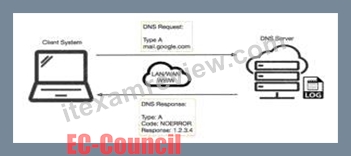
Many worms and scanners are created to seek out and exploit systems running telnet. Given these facts, it's really no surprise that telnet is usually seen on the highest Ten Target Ports list. Several of the vulnerabilities of telnet are fixed. They require only an upgrade to the foremost current version of the telnet Daemon or OS upgrade. As is usually the case, this upgrade has not been performed on variety of devices. this might flow from to the very fact that a lot of systems administrators and users don't fully understand the risks involved using telnet. Unfortunately, the sole solution for a few of telnets vulnerabilities is to completely discontinue its use. the well-liked method of mitigating all of telnets vulnerabilities is replacing it with alternate protocols like ssh. Ssh is capable of providing many of an equivalent functions as telnet and a number of other additional services typical handled by other protocols like FTP and Xwindows. Ssh does still have several drawbacks to beat before it can completely replace telnet. it's typically only supported on newer equipment. It requires processor and memory resources to perform the info encryption and decryption. It also requires greater bandwidth than telnet thanks to the encryption of the info . This paper was written to assist clarify how dangerous the utilization of telnet are often and to supply solutions to alleviate the main known threats so as to enhance the general security of the web Once a reputation is resolved to an IP caching also helps: the resolved name-to-IP is usually cached on the local system (and possibly on intermediate DNS servers) for a period of your time . Subsequent queries for an equivalent name from an equivalent client then don't leave the local system until said cache expires. Of course, once the IP address of the remote service is understood , applications can use that information to enable other TCP-based protocols, like HTTP, to try to to their actual work, for instance ensuring internet cat GIFs are often reliably shared together with your colleagues.
So, beat all, a couple of dozen extra UDP DNS queries from an organization's network would be fairly inconspicuous and will leave a malicious payload to beacon bent an adversary; commands could even be received to the requesting application for processing with little difficulty.
NEW QUESTION # 110
Taylor, a security professional, uses a tool to monitor her company's website, analyze the website's traffic, and track the geographical location of the users visiting the company's website. Which of the following tools did Taylor employ in the above scenario?
- A. WebSite Watcher
- B. Webroot
- C. WAFW00F
- D. web-Stat
Answer: D
Explanation:
Increase your web site's performance and grow! Add Web-Stat to your site (it's free!) and watch individuals act together with your pages in real time.
Learn how individuals realize your web site. Get details concerning every visitor's path through your web site and track pages that flip browsers into consumers.
One-click install. observe locations, in operation systems, browsers and screen sizes and obtain alerts for new guests and conversions
NEW QUESTION # 111
Given below are different steps involved in the vulnerability-management life cycle:
Remediation
Identify assets and create a baseline
Verification
Monitor
Vulnerability scan
Risk assessment
Identify the correct sequence of steps involved in vulnerability management.
- A. 2 # 1 # 5 # 6 # 4 # 3
- B. 2 # 5 # 6 # 1 # 3 # 4
- C. 1 # 2 # 3 # 4 # 5 # 6
- D. 2 # 4 # 5 # 3 # 6 # 1
Answer: B
Explanation:
In CEH v13 Module 10: Vulnerability Assessment, the Vulnerability Management Lifecycle is defined with the following structured steps:
Identify assets & baseline (Step 2)
Vulnerability scanning (Step 5)
Risk assessment/prioritization (Step 6)
Remediation (Step 1)
Verification (Step 3)
Continuous monitoring (Step 4)
So the correct lifecycle flow is:
2 # 5 # 6 # 1 # 3 # 4
This ensures vulnerabilities are identified, assessed, remediated, validated, and monitored on an ongoing basis.
Reference:
Module 10 - Vulnerability Management Lifecycle
CEH iLabs: End-to-End Vulnerability Assessment and Remediation
NEW QUESTION # 112
You have retrieved the raw hash values from a Windows 2000 Domain Controller. Using social engineering, you come to know that they are enforcing strong passwords. Passwords must be at least 8 characters and use 3 of the 4 categories (lowercase, uppercase, numbers, special characters). With your knowledge of likely user habits, what would be the fastest type of password cracking attack to run against these hash values?
- A. Online Attack
- B. Brute Force Attack
- C. Dictionary Attack
- D. Hybrid Attack
Answer: D
Explanation:
A hybrid attack combines a dictionary and brute-force approach. Given that:
* Passwords are required to be complex
* Users still often choose predictable variations (e.g., Password123!, Welcome@2024) A hybrid attack is best suited because it applies common mutations to known words-much faster than full brute force and more effective than a plain dictionary attack.
From CEH v13 Courseware:
* Module 6: Password Cracking # Attack Techniques
CEH v13 Study Guide states:
"Hybrid attacks combine the speed of dictionary attacks with some of the thoroughness of brute-force. It's ideal when users use complex but predictable passwords." Incorrect Options:
* A: Online attacks are slow and may trigger account lockouts.
* B: Plain dictionary attacks won't cover variations like "P@ssw0rd!"
* C: Brute-force would be too slow for complex passwords.
Reference:CEH v13 Study Guide - Module 6: Password Attack StrategiesOWASP Password Cracking Cheat Sheet
NEW QUESTION # 113
Thomas, a cloud security professional, is performing security assessment on cloud services to identify any loopholes. He detects a vulnerability in a bare-metal cloud server that can enable hackers to implant malicious backdoors in its firmware. He also identified that an installed backdoor can persist even if the server is reallocated to new clients or businesses that use it as an IaaS.
What is the type of cloud attack that can be performed by exploiting the vulnerability discussed in the above scenario?
- A. Metadata spoofing attack
- B. Cloud cryptojacking
- C. Cloudborne attack
- D. Man-in-the-cloud (MITC) attack
Answer: C
Explanation:
In CEH v13 Module 16: Cloud Computing and Container Security, Cloudborne attacks are described as threats specific to bare-metal cloud infrastructure.
Characteristics of a Cloudborne Attack:
Targets firmware-level vulnerabilities in reused physical servers.
Malware or backdoors can persist even after VM or OS reinstallation.
Can lead to compromise of new tenants or clients once servers are reallocated.
First highlighted in Project X by Eclypsium.
Option Clarification:
A: MITC: Exploits synchronization in cloud storage, not firmware.
B: Cryptojacking: Mining cryptocurrency using cloud resources.
C: Cloudborne attack: Correct - targets firmware on bare-metal cloud servers.
D: Metadata spoofing: Exploits cloud instance metadata services, unrelated to firmware.
Reference:
Module 16 - Advanced Cloud Attacks # Cloudborne Threats
CEH eBook: Firmware-Level Threats in Cloud Environments
NEW QUESTION # 114
You receive an e-mail like the one shown below. When you click on the link contained in the mail, you are redirected to a website seeking you to download free Anti-Virus software.
Dear valued customers,
We are pleased to announce the newest version of Antivirus 2010 for Windows which will probe you with total security against the latest spyware, malware, viruses, Trojans and other online threats. Simply visit the link below and enter your antivirus code:
or you may contact us at the following address:
Media Internet Consultants, Edif. Neptuno, Planta
Baja, Ave. Ricardo J. Alfaro, Tumba Muerto, n/a Panama
How will you determine if this is Real Anti-Virus or Fake Anti-Virus website?
- A. Download and install Anti-Virus software from this suspicious looking site, your Windows 7 will prompt you and stop the installation if the downloaded file is a malware
- B. Download and install Anti-Virus software from this suspicious looking site, your Windows 7 will prompt you and stop the installation if the downloaded file is a malware
- C. Search using the URL and Anti-Virus product name into Google and lookout for suspicious warnings against this site
- D. Look at the website design, if it looks professional then it is a Real Anti-Virus website
- E. Connect to the site using SSL, if you are successful then the website is genuine
Answer: C
NEW QUESTION # 115
Gregory, a professional penetration tester working at Sys Security Ltd., is tasked with performing a security test of web applications used in the company. For this purpose, Gregory uses a tool to test for any security loopholes by hijacking a session between a client and server. This tool has a feature of intercepting proxy that can be used to inspect and modify the traffic between the browser and target application. This tool can also perform customized attacks and can be used to test the randomness of session tokens. Which of the following tools is used by Gregory in the above scenario?
- A. CxSAST
- B. Burp Suite
- C. Nmap
- D. Wireshark
Answer: B
NEW QUESTION # 116
_________ is a type of phishing that targets high-profile executives such as CEOs, CFOs, politicians, and celebrities who have access to confidential and highly valuable information.
- A. Whaling
- B. Spear phishing
- C. Vishing
- D. Phishing
Answer: A
Explanation:
According to CEH v13 Module 09: Social Engineering, Whaling is a specific type of phishing attack that targets senior executives and high-value individuals.
It's called "whaling" because these individuals are the "big fish."
Attacks are highly targeted and customized, often using knowledge of the executive's company, responsibilities, or communication style.
The goal is to gain access to sensitive systems, financial assets, or confidential data.
Option Breakdown:
A). Spear phishing: Targeted phishing but not necessarily aimed at high-profile executives.
B). Whaling: Correct - phishing directed at C-level or VIP targets.
C). Vishing: Voice phishing - conducted over telephone/VoIP.
D). Phishing: General term - broader category.
Reference:
Module 09 - Social Engineering Techniques: Whaling vs. Phishing
CEH Engage Labs: Simulated Whaling and Spear Phishing Attacks
NEW QUESTION # 117
Which mode of IPSec should you use to assure security and confidentiality of data within the same LAN?
- A. ESP confidential
- B. AH permiscuous
- C. ESP transport mode
- D. AH Tunnel mode
Answer: C
Explanation:
ESP (Encapsulating Security Payload) in transport mode is used for end-to-end communication between hosts within the same LAN. It encrypts only the payload, not the header, ensuring confidentiality and integrity while maintaining efficient routing.
Reference - CEH v13 Official Study Guide:
Module 20: Cryptography
Quote:
"In ESP transport mode, only the data payload is encrypted, making it ideal for secure communication within a LAN where the IP header must remain intact for routing." Incorrect Options Explained:
B & C. Not valid IPSec modes.
D). AH tunnel mode ensures integrity but does not provide encryption.
NEW QUESTION # 118
Yancey is a network security administrator for a large electric company. This company provides power for over 100, 000 people in Las Vegas. Yancey has worked for his company for over 15 years and has become very successful. One day, Yancey comes in to work and finds out that the company will be downsizing and he will be out of a job in two weeks. Yancey is very angry and decides to place logic bombs, viruses, Trojans, and backdoors all over the network to take down the company once he has left. Yancey does not care if his actions land him in jail for 30 or more years, he just wants the company to pay for what they are doing to him.
What would Yancey be considered?
- A. Yancey would be considered a Suicide Hacker
- B. Because Yancey works for the company currently; he would be a White Hat
- C. Yancey is a Hacktivist Hacker since he is standing up to a company that is downsizing
- D. Since he does not care about going to jail, he would be considered a Black Hat
Answer: A
NEW QUESTION # 119
John is an incident handler at a financial institution. His steps in a recent incident are not up to the standards of the company. John frequently forgets some steps and procedures while handling responses as they are very stressful to perform. Which of the following actions should John take to overcome this problem with the least administrative effort?
- A. Increase his technical skills.
- B. Create an incident checklist.
- C. Read the incident manual every time it occurs.
- D. Select someone else to check the procedures.
Answer: A
NEW QUESTION # 120
John wants to send Marie an email that includes sensitive information, and he does not trust the network that he is connected to. Marie gives him the idea of using PGP. What should John do to communicate correctly using this type of encryption?
- A. Use Marie's private key to encrypt the message.
- B. Use his own private key to encrypt the message.
- C. Use his own public key to encrypt the message.
- D. Use Marie's public key to encrypt the message.
Answer: D
Explanation:
When a user encrypts plaintext with PGP, PGP first compresses the plaintext. The session key works with a very secure, fast conventional encryption algorithm to encrypt the plaintext; the result is ciphertext. Once the data is encrypted, the session key is then encrypted to the recipient's public key
https://en.wikipedia.org/wiki/Pretty_Good_Privacy
Pretty Good Privacy (PGP) is an encryption program that provides cryptographic privacy and authentication for data communication. PGP is used for signing, encrypting, and decrypting texts, e-mails, files, directories, and whole disk partitions and to increase the security of e-mail communications.
PGP encryption uses a serial combination of hashing, data compression, symmetric-key cryptography, and finally public-key cryptography; each step uses one of several supported algorithms. Each public key is bound to a username or an e-mail address.
https://en.wikipedia.org/wiki/Public-key_cryptography
Public key encryption uses two different keys. One key is used to encrypt the information and the other is used to decrypt the information. Sometimes this is referred to as asymmetric encryption because two keys are required to make the system and/or process work securely. One key is known as the public key and should be shared by the owner with anyone who will be securely communicating with the key owner. However, the owner's secret key is not to be shared and considered a private key. If the private key is shared with unauthorized recipients, the encryption mechanisms protecting the information must be considered compromised.
NEW QUESTION # 121
What is one of the advantages of using both symmetric and asymmetric cryptography in SSL/TLS?
- A. Asymmetric cryptography is computationally expensive in comparison. However, it is well-suited to securely negotiate keys for use with symmetric cryptography.
- B. Supporting both types of algorithms allows less-powerful devices such as mobile phones to use symmetric encryption instead.
- C. Symmetric encryption allows the server to securely transmit the session keys out-of-band.
- D. Symmetric algorithms such as AES provide a failsafe when asymmetric methods fail.
Answer: B
NEW QUESTION # 122
What is the following command used for?
net use \targetipc$ "" /u:""
- A. Enumeration of Cisco routers
- B. This command is used to connect as a null session
- C. Grabbing the etc/passwd file
- D. Grabbing the SAM
- E. Connecting to a Linux computer through Samba.
Answer: B
NEW QUESTION # 123
......
312-50v13 EXAM DUMPS WITH GUARANTEED SUCCESS: https://www.itexamreview.com/312-50v13-exam-dumps.html
Best Quality ECCouncil 312-50v13 Exam Questions: https://drive.google.com/open?id=1R12Slu1TU-oSlciKAeH8JxSo-uSUVpCt
