

Download Latest CIC Dumps with Authentic Real Exam Questions
Authentic CIC Exam Dumps PDF - Nov-2025 Updated
NEW QUESTION # 43
Which of the following strategies is MOST effective in reducing surgical site infections (SSI) in orthopedic procedures?
- A. Use of sterile adhesive wound dressings for 10 days postoperatively.
- B. Routine intraoperative wound irrigation with povidone-iodine.
- C. Administration of prophylactic antibiotics postoperatively for 48 hours.
- D. Perioperative normothermia maintenance.
Answer: D
Explanation:
* Perioperative normothermia maintenance reduces SSI rates by improving immune function and tissue perfusion.
* Routine wound irrigation (B) has no strong evidence supporting SSI prevention.
* Prolonged antibiotic use (C) increases antibiotic resistance without added benefit.
* Extended use of wound dressings (D) does not reduce SSI rates.
CBIC Infection Control References:
* APIC Text, "SSI Prevention in Surgery," Chapter 12.
NEW QUESTION # 44
An infection preventionist (IP) is tasked with developing an infection prevention training program for family members. What step should the IP take FIRST?
- A. Create clearly defined goals and objectives for the training.
- B. Develop a plan to create an appropriate training environment.
- C. Assess the needs of the family members at the facility.
- D. Ensure that all content in the training is relevant and practical.
Answer: C
Explanation:
The correct answer is A, "Assess the needs of the family members at the facility," as this is the first step the infection preventionist (IP) should take when developing an infection prevention training program for family members. According to the Certification Board of Infection Control and Epidemiology (CBIC) guidelines, effective education programs begin with a needs assessment to identify the specific knowledge gaps, cultural factors, and practical challenges of the target audience-in this case, family members. This initial step ensures that the training is tailored to their level of understanding, language preferences, and the infection risks they may encounter (e.g., hand hygiene, isolation protocols), aligning with adult learning principles (CBIC Practice Analysis, 2022, Domain IV: Education and Research, Competency 4.1 - Develop and implement educational programs). Without this assessment, subsequent steps risk being misaligned with the audience's needs, reducing the program's effectiveness.
Option B (create clearly defined goals and objectives for the training) is a critical step but follows the needs assessment, as goals should be based on identified needs to ensure relevance. Option C (ensure that all content in the training is relevant and practical) depends on understanding the audience's needs first, making it a later step in the development process. Option D (develop a plan to create an appropriate training environment) is important for implementation but requires prior knowledge of the audience and content to design effectively.
The focus on assessing needs aligns with CBIC's emphasis on evidence-based education design, enabling the IP to address specific infection prevention priorities for family members and improve outcomes in the facility (CBIC Practice Analysis, 2022, Domain IV: Education and Research, Competency 4.2 - Evaluate the effectiveness of educational programs). This approach is supported by CDC guidelines, which recommend audience assessment as a foundational step in health education programs.
References: CBIC Practice Analysis, 2022, Domain IV: Education and Research, Competencies 4.1 - Develop and implement educational programs, 4.2 - Evaluate the effectiveness of educational programs. CDC Health Education Curriculum Analysis Tool, 2019.
NEW QUESTION # 45
An employee is presenting to Occupational Health for clearance prior to starting work at a healthcare facility.
They have a history of having received the Bacillus Calmette-Guerin (BCG) vaccination. What is the preferred methodology for pre-work clearance?
- A. Two-step purified protein derivative-based Tuberculin skin test (TST)
- B. Initial chest radiograph
- C. Referral to tuberculosis (TB) clinic
- D. Interferon-gamma release assay
Answer: D
Explanation:
The preferred methodology for pre-work clearance in this scenario is the interferon-gamma release assay (IGRA), making option C the correct choice. This conclusion is supported by the guidelines from the Certification Board of Infection Control and Epidemiology (CBIC), which align with recommendations from the Centers for Disease Control and Prevention (CDC) for tuberculosis (TB) screening in healthcare workers.
The employee's history of receiving the Bacillus Calmette-Guerin (BCG) vaccination, a vaccine commonly used in some countries to prevent severe forms of TB, is significant because it can cause false-positive results in the traditional Tuberculin skin test (TST) due to cross-reactivity with BCG antigens (CBIC Practice Analysis, 2022, Domain I: Identification of Infectious Disease Processes, Competency 1.3 - Apply principles of epidemiology).
The IGRA, such as the QuantiFERON-TB Gold test, measures the release of interferon-gamma from T-cells in response to specific TB antigens (e.g., ESAT-6 and CFP-10) that are not present in BCG or most non- tuberculous mycobacteria. This makes it a more specific and reliable test for detecting latent TB infection (LTBI) in individuals with a history of BCG vaccination, avoiding the false positives associated with the TST.
The CDC recommends IGRA over TST for BCG-vaccinated individuals when screening for TB prior to healthcare employment (CDC Guidelines for Preventing Transmission of Mycobacterium tuberculosis, 2005, updated 2019).
Option A (referral to tuberculosis clinic) is a general action but not a specific methodology for clearance; it may follow testing if results indicate further evaluation is needed. Option B (initial chest radiograph) is used to detect active TB disease rather than latent infection and is not a primary screening method for pre-work clearance, though it may be indicated if IGRA results are positive. Option D (two-step purified protein derivative-based Tuberculin skin test) is less preferred because the BCG vaccination can lead to persistent cross-reactivity, reducing its specificity and reliability in this context. The two-step TST is typically used to establish a baseline in unvaccinated individuals with potential prior exposure, but it is not ideal for BCG- vaccinated individuals.
The IP's role includes ensuring accurate TB screening to protect both the employee and patients, aligning with CBIC's focus on preventing transmission of infectious diseases in healthcare settings (CBIC Practice Analysis, 2022, Domain III: Infection Prevention and Control, Competency 3.2 - Implement measures to prevent transmission of infectious agents).
References: CBIC Practice Analysis, 2022, Domain I: Identification of Infectious Disease Processes, Competency 1.3 - Apply principles of epidemiology; Domain III: Infection Prevention and Control, Competency 3.2 - Implement measures to prevent transmission of infectious agents. CDC Guidelines for Preventing Transmission of Mycobacterium tuberculosis, 2005, updated 2019.
NEW QUESTION # 46
Which of the following statements characterizes the proper use of chemical disinfectants?
- A. The label on the solution being used must indicate that it kills all viable micro-organisms.
- B. All items to be processed must be cleaned prior to being submerged in solution.
- C. A chemical indicator must be used with items undergoing high-level disinfection.
- D. The solution should be adaptable for use as an antiseptic.
Answer: B
Explanation:
The proper use of chemical disinfectants is a critical aspect of infection control, as outlined by the Certification Board of Infection Control and Epidemiology (CBIC). Chemical disinfectants are used to eliminate or reduce pathogenic microorganisms on inanimate objects, and their effective application requires adherence to specific protocols to ensure safety and efficacy. Let's evaluate each option based on infection control standards:
* A. All items to be processed must be cleaned prior to being submerged in solution.: This statement is a fundamental principle of disinfectant use. Cleaning (e.g., removing organic material such as blood, tissue, or dirt) is a prerequisite before disinfection because organic matter can inactivate or reduce the effectiveness of chemical disinfectants. The CBIC emphasizes that proper cleaning is the first step in the disinfection process to ensure that disinfectants can reach and kill microorganisms. This step is universally required for all levels of disinfection (low, intermediate, and high), making it a characterizing feature of proper use.
* B. The label on the solution being used must indicate that it kills all viable micro-organisms.: This statement is misleading. No disinfectant can be guaranteed to kill 100% ofall viable microorganisms under all conditions, as efficacy depends on factors like contact time, concentration, and the presence of organic material. Disinfectant labels typically indicate the types of microorganisms (e.g., bacteria, viruses, fungi) and the level of disinfection (e.g., high-level, intermediate-level) they are effective against, based on standardized tests (e.g., EPA or FDA guidelines). Claiming that a solution kills all viable microorganisms is unrealistic and not a requirement for proper use; instead, the label must specify the intended use and efficacy, which varies by product.
* C. The solution should be adaptable for use as an antiseptic.: An antiseptic is a chemical agent used on living tissue (e.g., skin) to reduce microbial load, whereas a disinfectant is used on inanimate surfaces.
While some chemicals (e.g., alcohol) can serve both purposes, this is not a requirement for proper disinfectant use. The adaptability of a solution for antiseptic use is irrelevant to its classification or application as a disinfectant, which focuses on environmental or equipment decontamination. This statement does not characterize proper disinfectant use.
* D. A chemical indicator must be used with items undergoing high-level disinfection.: Chemical indicators (e.g., test strips or tapes) are used to verify that the disinfection process has met certain parameters (e.g., concentration or exposure time), particularly in sterilization or high-level disinfection (HLD). While this is a recommended practice for quality assurance in HLD (e.g., with glutaraldehyde or hydrogen peroxide), it is not a universal requirement for all chemical disinfectant use. HLD applies specifically to semi-critical items (e.g., endoscopes), and the need for indicators depends on the protocol and facility standards. This statement is too narrow and specific to characterize the proper use of chemical disinfectants broadly.
The correct answer is A, as cleaning prior to disinfection is a foundational and universally applicable step in the proper use of chemical disinfectants. This aligns with CBIC guidelines, which stress the importance of a clean surface to maximize disinfectant efficacy and prevent infection transmission in healthcare settings.
:
CBIC Infection Prevention and Control (IPC) Core Competency Model (updated 2023), Domain IV:
Environment of Care, which mandates cleaning as a prerequisite for effective disinfection.
CBIC Examination Content Outline, Domain III: Prevention and Control of Infectious Diseases, which includes protocols for the proper use of disinfectants, emphasizing pre-cleaning.
CDC Guidelines for Disinfection and Sterilization in Healthcare Facilities (2021), which reinforce that cleaning must precede disinfection to ensure efficacy.
NEW QUESTION # 47
In the current year, cases of tuberculosis (TB) among foreign-born persons accounted for the majority of new TB cases in the United States. The number of states with greater than 50% of cases among foreign-born persons increased from four cases ten years ago to 22 cases in the current year. This information can BEST be used to
* heighten awareness among Emergency Department staff.
* inform staff who are foreign-born.
* educate patients and visitors.
* review the TB exposure control plan.
- A. 2 and 3 only.
- B. 1 and 2 only.
- C. 3 and 4 only.
- D. 1 and 4 only.
Answer: D
Explanation:
The correct answer is B, "1 and 4 only," indicating that the information can best be used to heighten awareness among Emergency Department (ED) staff and review the TB exposure control plan. According to the Certification Board of Infection Control and Epidemiology (CBIC) guidelines, tuberculosis (TB) remains a significant public health concern, particularly with the increasing proportion of cases among foreign-born persons in the United States. The data showing a rise from four to 22 states with over 50% of TB cases among foreign-born individuals highlights an evolving epidemiological trend that warrants targeted infection prevention strategies (CBIC Practice Analysis, 2022, Domain II: Surveillance and Epidemiologic Investigation, Competency 2.1 - Conduct surveillance for healthcare-associated infections and epidemiologically significant organisms).
Heightening awareness among ED staff (option 1) is critical because the ED is often the first point of contact for patients with undiagnosed or active TB, especially those from high-prevalence regions. Increased awareness can improve early identification, isolation, and reporting of potential cases. Reviewing the TB exposure control plan (option 4) is equally important, as it allows the infection preventionist to assess and update protocols-such as ventilation, personal protective equipment (PPE) use, and screening processes-to address the heightened risk posed by the growing number of cases among foreign-born individuals (CBIC Practice Analysis, 2022, Domain III: Infection Prevention and Control, Competency 3.2 - Implement measures to prevent transmission of infectious agents).
Option 2 (inform staff who are foreign-born) is not the best use of this data, as the information pertains to patient demographics rather than staff risk, and targeting staff based on their origin could be inappropriate without specific exposure evidence. Option 3 (educate patients and visitors) is a general education strategy but less directly actionable with this specific epidemiological data, which is more relevant to healthcare worker preparedness and facility protocols. Combining options 1 and 4 aligns with CBIC's emphasis on using surveillance data to guide prevention and control measures, ensuring a proactive response to the increased TB burden (CBIC Practice Analysis, 2022, Domain II: Surveillance and Epidemiologic Investigation, Competency 2.5 - Use data to guide infection prevention and control strategies).
References: CBIC Practice Analysis, 2022, Domain II: Surveillance and Epidemiologic Investigation, Competencies 2.1 - Conduct surveillance for healthcare-associated infections and epidemiologically significant organisms, 2.5 - Use data to guide infection prevention and control strategies; Domain III:
Infection Prevention and Control, Competency 3.2 - Implement measures to prevent transmission of infectious agents.
NEW QUESTION # 48
There are four cases of ventilator-associated pneumonia in a surgical intensive care unit with a total of 200 ventilator days and a census of 12 patients. Which of the following BEST expresses how this should be reported?
- A. More information is needed regarding ventilator days per patient
- B. Postoperative pneumonia rate of 6% in SICU patients
- C. Ventilator-associated pneumonia rate of 2%
- D. 20 ventilator-associated pneumonia cases/1000 ventilator days
Answer: D
Explanation:
The standard way to report ventilator-associated pneumonia (VAP) rates is:
A white paper with black text AI-generated content may be incorrect.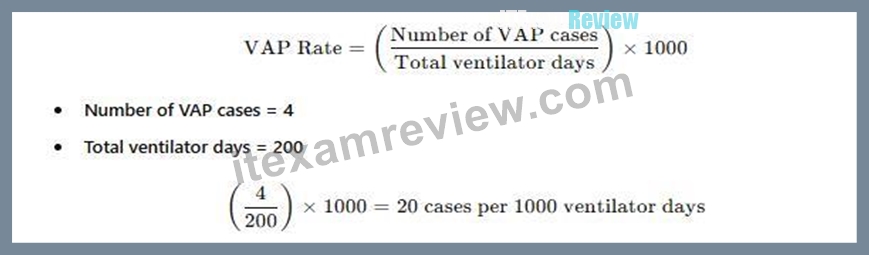
Why the Other Options Are Incorrect?
* A. Ventilator-associated pneumonia rate of 2% - This does not use the correct denominator (ventilator days).
* C. Postoperative pneumonia rate of 6% in SICU patients - Not relevant, as the data focuses on VAP, not postoperative pneumonia.
* D. More information is needed regarding ventilator days per patient - The total ventilator days are already provided, so no additional data is required.
CBIC Infection Control Reference
APIC and NHSN recommend reporting VAP rates as cases per 1,000 ventilator days.
NEW QUESTION # 49
An infection preventionist (IP) is informed of a measles outbreak in a nearby community. What is the IP's FIRST priority when working with Occupational Health?
- A. Reassign employees who are pregnant from caring for patients with suspected measles.
- B. Verify that employees in high-risk exposure areas of the facility have adequate immunity to measles.
- C. Set up a mandatory vaccination clinic in collaboration with Occupational Health and local public health partners.
- D. Isolate employees who have recently traveled to areas with measles outbreaks.
Answer: B
Explanation:
When an infection preventionist (IP) is informed of a measles outbreak in a nearby community, the immediate priority is to protect healthcare workers and patients from potential exposure, particularly in a healthcare setting where vulnerable populations are present. Working with Occupational Health, the IP must follow a structured approach to mitigate the risk of transmission, guided by principles from the Certification Board of Infection Control and Epidemiology (CBIC) and public health guidelines. Let's evaluate each option to determine the first priority:
* A. Isolate employees who have recently traveled to areas with measles outbreaks: Isolating employees who may have been exposed to measles during travel is an important infection control measure to prevent transmission within the facility. However, this action assumes that exposure has already occurred and requires identification of affected employees first. Without knowing the immunity status of the workforce, this step is reactive rather than preventive and cannot be the first priority.
* B. Reassign employees who are pregnant from caring for patients with suspected measles: Reassigning pregnant employees is a protective measure due to the severe risks measles poses to fetuses (e.g., congenital rubella syndrome risks, though measles itself is more about maternal complications). This action is specific to a subset of employees and depends on identifying patients with suspected measles, which may not yet be confirmed. It is a secondary step that follows assessing overall immunity and exposure risks, making it inappropriate as the first priority.
* C. Verify that employees in high-risk exposure areas of the facility have adequate immunity to measles:
Verifying immunity is the foundational step in preventing measles transmission in a healthcare setting.
Measles is highly contagious, and healthcare workers in high-risk areas (e.g., emergency departments, pediatric wards) are at increased risk of exposure. The CBIC and CDC recommend ensuring that all healthcare personnel have documented evidence of measles immunity (e.g., two doses of MMR vaccine, laboratory evidence of immunity, or prior infection) as a primary infection control strategy during outbreaks. This step allows the IP to identify vulnerable employees, implement targeted interventions, and comply with occupational health regulations. It is the most proactive and immediate priority when an outbreak is reported in the community.
* D. Set up a mandatory vaccination clinic in collaboration with Occupational Health and local public health partners: Establishing a vaccination clinic is a critical long-term strategy to increase immunity and control the outbreak. However, this requires planning, resource allocation, and coordination, which take time. It is a subsequent step that follows verifying immunity status to identify those who need vaccination. While important, it cannot be the first priority due to its logistical demands.
The first priority is C, as verifying immunity among employees in high-risk areas establishes a baseline to prevent transmission before reactive measures (e.g., isolation, reassignment) or broader interventions (e.g., vaccination clinics) are implemented. This aligns with CBIC's focus on proactive risk assessment and occupational health safety during infectious disease outbreaks, ensuring a rapid response to protect the healthcare workforce and patients.
:
CBIC Infection Prevention and Control (IPC) Core Competency Model (updated 2023), Domain III:
Prevention and Control of Infectious Diseases, which prioritizes immunity verification during outbreaks.
CBIC Examination Content Outline, Domain IV: Environment of Care, which includes ensuring employee immunity as part of outbreak preparedness.
CDC Guidelines for Measles Prevention (2023), which recommend verifying healthcare worker immunity as the initial step during a measles outbreak.
NEW QUESTION # 50
Using tap water to rinse suction tubing can cause transmission of
- A. Streptococcus spp.
- B. Staphylococcus spp.
- C. Pseudomonas spp.
- D. Klebsiella spp.
Answer: C
Explanation:
Pseudomonasspp., particularlyPseudomonas aeruginosa, is acommon waterborne pathogen. Using tap water to rinse suction tubing has been associated withoutbreaks ofPseudomonasinfections.
* From theAPIC Text:
"Water bottles improperly filled with tap water and used for rinsing tracheal suction tubing resulted in an outbreak ofP. cepacia... Tubing permanently attached to showers... implicated in a serious outbreak ofP.
aeruginosabloodstream infection."
References:
APIC Text, 4th Edition, Chapter 117 - Waterborne Pathogens
NEW QUESTION # 51
Given the formula for calculating incidence rates, the Y represents which of the following?
- A. Number of events
- B. Population at risk
- C. Number of infected patients
- D. Population served
Answer: B
Explanation:
Incidence rate is a fundamental epidemiological measure used to quantify the frequency of new cases of a disease within a specified population over a defined time period. The Certification Board of Infection Control and Epidemiology (CBIC) supports the use of such metrics in the "Surveillance and Epidemiologic Investigation" domain, aligning with the Centers for Disease Control and Prevention (CDC) "Principles of Epidemiology in Public Health Practice" (3rd Edition, 2012). The formula provided, XY×K=Rate\frac{X}
{Y} \times K = RateYX×K=Rate, represents the standard incidence rate calculation, where KKK is a constant (e.g., 1,000 or 100,000) to express the rate per unit population, and the question asks what YYY represents among the given options.
In the incidence rate formula, XXX typically represents the number of new cases (or events) of the disease occurring during a specific period, and YYY represents the population at risk during that same period. The ratio XY\frac{X}{Y}YX yields the rate per unit of population, which is then multiplied by KKK to standardize the rate (e.g., cases per 1,000 persons). The CDC defines the denominator (YYY) as the population at risk, which includes individuals susceptible to the disease over the observation period. Option B ("Number of infected patients") might suggest XXX if it specified new cases, but as the denominator YYY, it is incorrect because incidence focuses on new cases relative to the at-risk population, not the total number of infected individuals (which could include prevalent cases). Option C ("Population at risk") correctly aligns with YYY, representing the base population over which the rate is calculated.
Option A, "Population served," is a broader term that might include the total population under care (e.g., in a healthcare facility), but it is not specific to those at risk for new infections, making it less precise. Option D,
"Number of events," could align with XXX (new cases or events), but as the denominator YYY, it does not fit the formula's structure. The CBIC Practice Analysis (2022) and CDC guidelines reinforce that the denominator in incidence rates is the population at risk, ensuring accurate measurement of new disease occurrence.
References:
* CBIC Practice Analysis, 2022.
* CDC Principles of Epidemiology in Public Health Practice, 3rd Edition, 2012.
NEW QUESTION # 52
A hospital is experiencing an increase in vancomycin-resistant Enterococcus (VRE) infections in the hematology-oncology unit. Which of the following interventions is MOST effective in halting the spread of VRE in this high-risk setting?
- A. Implementing a hand hygiene compliance audit and feedback system.
- B. Restricting the use of vancomycin for all patients in the hospital.
- C. Conducting environmental sampling for VRE contamination weekly.
- D. Screening all patients on admission and placing positive patients in isolation.
Answer: A
Explanation:
Comprehensive and Detailed In-Depth Explanation:
Hand hygiene remains the single most effective intervention to prevent the spread of vancomycin-resistant Enterococcus (VRE) in healthcare settings. Implementing an audit and feedback system significantly improves compliance and reduces VRE transmission.
Step-by-Step Justification:
* Hand Hygiene Compliance Audit and Feedback (Best Strategy)
* Studies show that poor hand hygiene is the primary mode of VRE transmission in hospitals.
* Implementing real-time auditing with feedback ensures sustained compliance and helps identify weak areas.
* Why Other Options Are Incorrect:
* A. Screening all patients and isolating VRE-positive patients:
* While screening helps identify carriers, contact precautions alone are not sufficient without strong hand hygiene enforcement.
* B. Restricting vancomycin use:
* While antimicrobial stewardship is crucial, vancomycin use alone does not drive VRE outbreaks-poor infection control practices do.
* D. Conducting environmental sampling weekly:
* Routine sampling is not necessary; immediate terminal disinfection and improved hand hygiene are more effective.
CBIC Infection Control References:
* APIC Text, "VRE Prevention and Hand Hygiene," Chapter 11.
* APIC-JCR Workbook, "Antimicrobial Resistance and Infection Control Measures," Chapter 7.
NEW QUESTION # 53
Working with public health agencies to collect and analyze indicators that might signal an increase in community illness is an example of which type of surveillance?
- A. Passive
- B. Active
- C. Targeted
- D. Syndromic
Answer: D
Explanation:
Surveillance is a critical tool in infection prevention and control, used to monitor disease trends and guide public health responses. The Certification Board of Infection Control and Epidemiology (CBIC) emphasizes the "Surveillance and Epidemiologic Investigation" domain, which aligns withthe Centers for Disease Control and Prevention (CDC) "Principles of Epidemiology in Public Health Practice" (3rd Edition, 2012). The question describes a process of collecting and analyzing indicators to signal an increase in community illness, requiring identification of the appropriate surveillance type among the options provided.
Option C, "Syndromic," is the correct answer. Syndromic surveillance involves monitoring non-specific health indicators or symptoms (e.g., fever, respiratory complaints, or gastrointestinal issues) that may precede a formal diagnosis, aiming to detect potential outbreaks or increases in community illness early. The CDC defines syndromic surveillance as the real-time or near-real-time collection, analysis, and interpretation of health-related data to provide actionable information, often in collaboration with public health agencies. This approach uses data from sources like emergency department visits, over-the-counter medication sales, or absenteeism reports to identify trends before laboratory confirmation, making it well-suited to the described scenario of signaling community illness increases.
Option A, "Passive," involves healthcare providers or laboratories reporting cases to public health authorities on a voluntary or mandatory basis without active prompting (e.g., routine notifiable disease reporting). While passive surveillance contributes to baseline data, it is less proactive and not specifically designed to signal early increases in illness, making it less fitting. Option B, "Active," entails public health officials actively seeking data from healthcare facilities or providers (e.g., calling to confirm cases during an outbreak). This is more resource-intensive and typically used for specific investigations rather than ongoing community trend monitoring, which aligns better with syndromic methods. Option D, "Targeted," refers to surveillance focused on a specific population, disease, or event (e.g., monitoring TB in a high-risk group). The scenario's broad focus on community illness indicators does not suggest a targeted approach.
The CBIC Practice Analysis (2022) and CDC guidelines highlight syndromic surveillance as a key strategy for early detection of community-wide health threats, often involving collaboration with public health agencies. Option C best matches the described activity of analyzing indicators to signal illness increases, making it the correct choice.
References:
CBIC Practice Analysis, 2022.
CDC Principles of Epidemiology in Public Health Practice, 3rd Edition, 2012.
CDC Syndromic Surveillance Systems, 2020.
NEW QUESTION # 54
A healthcare worker experiences a percutaneous exposure to a patient with untreated HIV. The next step is to:
- A. Offer post-exposure prophylaxis only if symptoms develop.
- B. Retest for HIV after 6 months before deciding on PEP.
- C. Initiate HIV post-exposure prophylaxis (PEP) within 2 hours.
- D. Wait for HIV test results before starting treatment.
Answer: C
Explanation:
* HIV post-exposure prophylaxis (PEP) should be initiated within 2 hours to be most effective.
* Waiting for results (B) delays critical treatment.
* PEP should always be offered after high-risk exposure, not only if symptoms develop (C).
* Retesting after 6 months (D) is recommended but should not delay PEP initiation.
CBIC Infection Control References:
* APIC Text, "Bloodborne Pathogens and PEP," Chapter 11.
NEW QUESTION # 55
Which of the following stains is used to identify mycobacteria?
- A. Acid-fast
- B. India ink
- C. Gram
- D. Methylene blue
Answer: A
Explanation:
Mycobacteria, including species such as Mycobacterium tuberculosis and Mycobacterium leprae, are a group of bacteria known for their unique cell wall composition, which contains a high amount of lipid-rich mycolic acids. This characteristic makes them resistant to conventional staining methods and necessitates the use of specialized techniques for identification. The acid-fast stain is the standard method for identifying mycobacteria in clinical and laboratory settings. This staining technique, developed by Ziehl-Neelsen, involves the use of carbol fuchsin, which penetrates the lipid-rich cell wall of mycobacteria. After staining, the sample is treated with acid-alcohol, which decolorizes non-acid-fast organisms, while mycobacteria retain the red color due to their resistance to decolorization-hence the term "acid-fast." This property allows infection preventionists and microbiologists to distinguish mycobacteria from other bacteria under a microscope.
Option B, the Gram stain, is a common differential staining technique used to classify most bacteria into Gram-positive or Gram-negative based on the structure of their cell walls. However, mycobacteria do not stain reliably with the Gram method due to their thick, waxy cell walls, rendering it ineffective for their identification. Option C, methylene blue, is a simple stain used to observe bacterial morphology or as a counterstain in other techniques (e.g., Gram staining), but it lacks the specificity to identify mycobacteria.
Option D, India ink, is used primarily to detect encapsulated organisms such as Cryptococcus neoformans by creating a negative staining effect around the capsule, and it is not suitable for mycobacteria.
The CBIC's "Identification of Infectious Disease Processes" domain underscores the importance of accurate diagnostic methods in infection control, including the use of appropriate staining techniques to identify pathogens like mycobacteria. The acid-fast stain is specifically recommended by the CDC and WHO for the initial detection of mycobacterial infections, such as tuberculosis, in clinical specimens (CDC, Laboratory Identification of Mycobacteria, 2008). This aligns with the CBIC Practice Analysis (2022), which emphasizes the role of laboratory diagnostics in supporting infection prevention strategies.
References:
* CBIC Practice Analysis, 2022.
* CDC Laboratory Identification of Mycobacteria, 2008.
* WHO Guidelines for the Laboratory Diagnosis of Tuberculosis, 2014.
NEW QUESTION # 56
Therapeutic antimicrobial agents should be used when
- A. the infecting agent is unknown
- B. the patient symptoms suggest likely pathogens.
- C. Following identification of the pathogen and sensitives.
- D. the patient's illness warrants treatment prior to culture results
Answer: C
Explanation:
Therapeutic antimicrobial agents should ideally be pathogen-directed to minimize resistance, side effects, and treatment failure. Once the causative pathogen and its antimicrobial susceptibilities are known, the most narrow-spectrum, effective agent should be used.
Why the Other Options Are Incorrect?
* A. The infecting agent is unknown - Empiric therapy may be necessary initially, but definitive therapy should be based on pathogen identification.
* B. The patient's illness warrants treatment prior to culture results - This applies to empiric therapy, but not to definitive antimicrobial selection.
* C. The patient's symptoms suggest likely pathogens - Clinical presentation guides empiric treatment, but definitive therapy should follow culture and susceptibility testing.
CBIC Infection Control Reference
APIC emphasizes the importance of selecting antimicrobials based on pathogen identification and susceptibility testing to prevent antimicrobial resistance.
NEW QUESTION # 57
An infection preventionist is calculating measures of central tendency regarding duration of a surgical procedure using this data set: 2, 2, 3, 4, and 9. Which of the following statements is correct?
- A. The median is 2.
- B. The mean is 4.
- C. The mode is 3.
- D. The standard deviation is 7.
Answer: B
Explanation:
Measures of central tendency (mean, median, mode) and dispersion (standard deviation) are statistical tools used to summarize data, such as the duration of surgical procedures, which can help infection preventionists identify trends or risks for surgical site infections. The Certification Board of Infection Control and Epidemiology (CBIC) supports the use of data analysis in the "Surveillance and Epidemiologic Investigation" domain, aligning with epidemiological principles outlined by the Centers for Disease Control and Prevention (CDC). The question provides a data set of 2, 2, 3, 4, and 9, and requires determining the correct statement by calculating these measures.
* Mean: The mean is the average of the data set, calculated by summing all values and dividing by the number of observations. For the data set 2, 2, 3, 4, and 9:(2 + 2 + 3 + 4 + 9) ÷ 5 = 20 ÷ 5 = 4. Thus, the mean is 4, making Option C correct.
* Median: The median is the middle value when the data set is ordered. With five values (2, 2, 3, 4, 9), the middle value is the third number, which is 3. Option A states the median is 2, which is incorrect.
* Mode: The mode is the most frequently occurring value. In this data set, 2 appears twice, while 3, 4, and 9 appear once each, making 2 the mode. Option B states the mode is 3, which is incorrect.
* Standard Deviation: The standard deviation measures the spread of data around the mean. For a small data set like this, the calculation involves finding the variance (average of squared differences from the mean) and taking the square root. The mean is 4, so the deviations are: (2-4)² = 4, (2-4)² = 4, (3-4)² = 1, (4-4)² = 0, (9-4)² = 25. The sum of squared deviations is 4 + 4 + 1 + 0 + 25 = 34. The variance is 34 ÷ 5
= 6.8, and the standard deviation is #6.8 # 2.61 (not 7). Option D states the standard deviation is 7, which is incorrect without further context (e.g., a population standard deviation with n-1 denominator would be #34 # 5.83, still not 7).
The CBIC Practice Analysis (2022) and CDC guidelines encourage accurate statistical analysis to inform infection control decisions, such as assessing surgical duration as a risk factor for infections. Based on the calculations, the mean of 4 is the only correct statement among the options, confirming Option C as the answer. Note that the standard deviation of 7 might reflect a miscalculation or misinterpretation (e.g., using a different formula or data set), but with the given data, it does not hold.
References:
* CBIC Practice Analysis, 2022.
* CDC Principles of Epidemiology in Public Health Practice, 3rd Edition, 2012.
NEW QUESTION # 58
After defining and identifying cases in a possible cluster of infections, an infection preventionist should NEXT establish:
- A. Whether observed incidence exceeds expected incidence.
- B. A hypothesis that will explain the majority of cases.
- C. An appropriate control group.
- D. The route of transmission.
Answer: B
Explanation:
When investigating a possible cluster of infections, an infection preventionist (IP) follows a structured epidemiological approach to identify the cause and implement control measures. The Certification Board of Infection Control and Epidemiology (CBIC) outlines this process within the "Surveillance and Epidemiologic Investigation" domain, which aligns with the Centers for Disease Control and Prevention (CDC) guidelines for outbreak investigation. The steps typically include defining and identifying cases, formulating a hypothesis, testing the hypothesis, and implementing control measures. The question specifies the next step after defining and identifying cases, requiring an evaluation of the logical sequence.
Option C, "A hypothesis that will explain the majority of cases," is the next critical step. After confirming a cluster through case definition and identification (e.g., by time, place, and person), the IP should develop a working hypothesis to explain the observed pattern. This hypothesis might propose a common source (e.g., contaminated equipment), a mode of transmission (e.g., airborne), or a specific population at risk. The CDC's
"Principles of Epidemiology in Public Health Practice" (3rd Edition, 2012) emphasizes that formulating a hypothesis is essential to guide further investigation, such as identifying risk factors or environmental sources.
This step allows the IP to focus resources on testing the most plausible explanation before proceeding to detailed analysis or interventions.
Option A, "The route of transmission," is an important element of the investigation but typically follows hypothesis formulation. Determining the route (e.g., contact, droplet, or common vehicle) requires data collection and analysis to test the hypothesis, making it a subsequent step rather than the immediate next action. Option B, "An appropriate control group," is relevant for analytical studies (e.g., case-control studies) to compare exposed versus unexposed individuals, but this is part of hypothesis testing, which occurs after the hypothesis is established. Selecting a control group prematurely, without a hypothesis, lacks direction and efficiency. Option D, "Whether observed incidence exceeds expected incidence," is a preliminary step to define a cluster, often done during case identification using baseline data or statistical thresholds (e.g., exceeding the mean plus two standard deviations). Since the question assumes cases are already defined and identified, this step is complete, and the focus shifts to hypothesis development.
The CBIC Practice Analysis (2022) and CDC guidelines prioritize hypothesis formulation as the logical next step after case identification, enabling a targeted investigation. This approach ensures that the IP can efficiently address the cluster's cause, making Option C the correct answer.
References:
* CBIC Practice Analysis, 2022.
* CDC Principles of Epidemiology in Public Health Practice, 3rd Edition, 2012.
NEW QUESTION # 59
An infection preventionist (IP) encounters a surgeon at the nurse's station who loudly disagrees with the IP's surgical site infection findings. The IP's BEST response is to:
- A. Ask the surgeon to change their tone and leave the nurses' station if they refuse.
- B. Ask the surgeon to speak in a more private setting to review their concerns.
- C. Report the surgeon to the chief of staff.
- D. Calmly explain that the findings are credible.
Answer: B
Explanation:
The scenario involves a conflict between an infection preventionist (IP) and a surgeon regarding surgical site infection (SSI) findings, occurring in a public setting (the nurse's station). The IP's response must align with professional communication standards, infection control priorities, and the principles of collaboration and conflict resolution as emphasized by the Certification Board of Infection Control and Epidemiology (CBIC).
The "best" response should de-escalate the situation, maintain professionalism, and facilitate a constructive dialogue. Let's evaluate each option:
* A. Report the surgeon to the chief of staff: Reporting the surgeon to the chief of staff might be considered if the behavior escalates or violates policy (e.g., harassment or disruption), but it is an escalation that should be a last resort. This action does not address the immediate disagreement about the SSI findings or attempt to resolve the issue collaboratively. It could also strain professional relationships and is not the best initial response, as it bypasses direct communication.
* B. Calmly explain that the findings are credible: Explaining the credibility of the findings is important and demonstrates the IP's confidence in their work, which is based on evidence-based infection control practices. However, doing so in a public setting like the nurse's station, especially with a loud disagreement, may not be effective. The surgeon may feel challenged or defensive, potentially worsening the situation. While this response has merit, it lacks consideration of the setting and the need for privacy to discuss sensitive data.
* C. Ask the surgeon to speak in a more private setting to review their concerns: This response is the most appropriate as it addresses the immediate need to de-escalate the public confrontation and move the discussion to a private setting. It shows respect for the surgeon's concerns, maintains professionalism, and allows the IP to review the SSI findings (e.g., data collection methods, definitions, or surveillance techniques) in a controlled environment. This aligns with CBIC's emphasis on effective communication and collaboration with healthcare teams, as well as the need to protect patient confidentiality and maintain a professional atmosphere. It also provides an opportunity to educate the surgeon on the evidence behind the findings, which is a key IP role.
* D. Ask the surgeon to change their tone and leave the nurses' station if they refuse: Requesting a change in tone is reasonable given the loud disagreement, but demanding the surgeon leave if they refuse is confrontational and risks escalating the conflict. This approach could damage the working relationship and does not address the underlying disagreement about the SSI findings. While maintaining a respectful environment is important, this response prioritizes control over collaboration and is less constructive than seeking a private discussion.
The best response is C, as it promotes a professional, collaborative approach by moving the conversation to a private setting. This allows the IP to address the surgeon's concerns, explain the SSI surveillance methodology (e.g., NHSN definitions or CBIC guidelines), and maintain a positive working relationship, which is critical for effective infection prevention programs. This strategy reflects CBIC's focus on leadership, communication, and teamwork in healthcare settings.
References:
* CBIC Infection Prevention and Control (IPC) Core Competency Model (updated 2023), Domain V:
Management and Communication, which stresses effective interpersonal communication and conflict resolution.
* CBIC Examination Content Outline, Domain V: Leadership and Program Management, which includes collaborating with healthcare personnel and addressing disagreements professionally.
* CDC Guidelines for SSI Surveillance (2023), which emphasize the importance of clear communication of findings to healthcare teams.
NEW QUESTION # 60
......
CIC Dumps for success in Actual Exam: https://www.itexamreview.com/CIC-exam-dumps.html
CIC Dumps Special Discount for limited time Try FOR FREE: https://drive.google.com/open?id=1ZLSyKP7_cBhjsw4DsSbpgStVxIon5zBo
